The 4-Step Roadmap to Restoring Firefighter Energy
Why so many firefighters feel drained in gear — and how to fix it without guessing

A lot of firefighters think low energy is just part of the job.
Bad sleep.
Long shifts.
Too many calls.
Too many years on.
So they accept it.
But that’s a mistake.
Because while the schedule absolutely matters, energy loss on the job usually comes from more than one thing — and if you want it back, you need a plan.
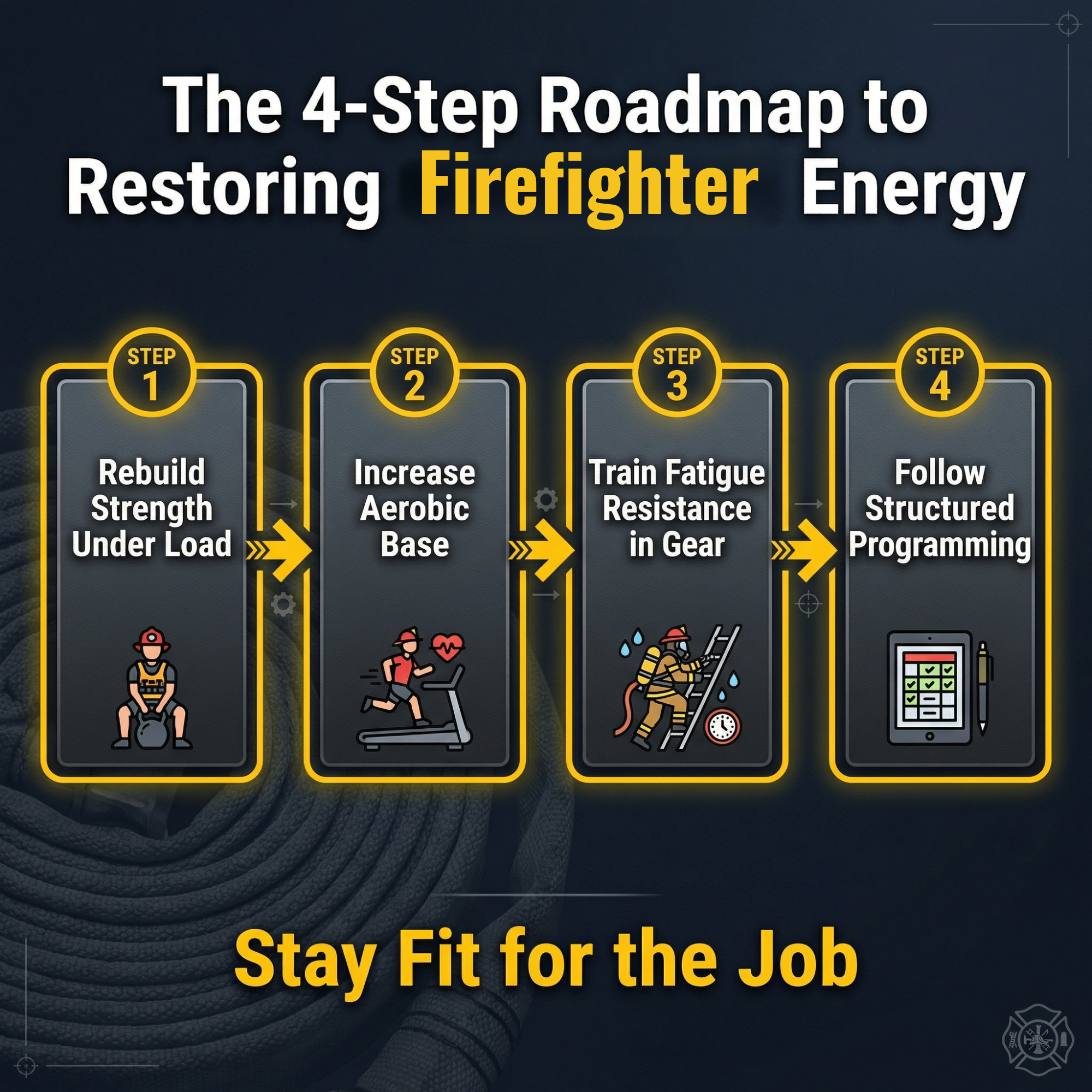
Here’s the 4-step roadmap to restoring firefighter energy.
1. Rebuild Strength Under Load
If you feel more drained in gear than you used to, one of the first places to look is your strength.
Not gym strength for ego lifts.
Not mirror muscles.
Useful strength.
The kind that helps you:
-
carry weight without folding
-
move efficiently under gear
-
brace your core when tired
-
keep your legs under you on stairs
-
stay strong when the call gets physical
When strength drops, everything feels heavier.
And when everything feels heavier, your energy disappears faster.
That’s why rebuilding strength under load matters first.
2. Increase Your Aerobic Base

A lot of firefighters try to solve low energy by doing more hard workouts.
That usually backfires.
If your aerobic base is weak, your heart rate spikes too fast, your breathing gets sloppy, and your energy tanks early. That means even basic work in gear starts feeling harder than it should.
This is exactly why Fit For Service starts by rebuilding conditioning, not just throwing random workouts at you. If your engine is weak, everything else feels harder.

3. Train Fatigue Resistance in Gear
This is where a lot of firefighters miss the mark.
They train in shorts, clean shoes, perfect air, and predictable conditions… then wonder why their body falls apart in turnout gear.
The job doesn’t happen fresh.
It happens tired.
It happens hot.
It happens under load.
It happens while your breathing is restricted and your heart rate is already high.
That means you need to train your body to resist fatigue in the exact conditions that expose weakness.
4. Follow Structured Programming
This is the step that ties everything together.
Most firefighters don’t have an effort problem, they have a structure problem.
They train hard for a week.
Then life gets messy.
Then they fall off.
Then they restart.
Then they wonder why nothing changes.
Random effort creates random results.
Structured programming gives you:
-
progression
-
balance
-
recovery
-
purpose
-
consistency
-
confidence that what you’re doing is actually working
And when the programming fits the reality of firefighter life, you stop guessing and start rebuilding.
That’s where Fit For Service comes in.
It gives firefighters a structured plan to rebuild strength, conditioning, mobility, and real-world readiness — without needing to invent the process from scratch.
The Real Goal Isn’t Just More Energy, It’s More Work Capacity
You don’t just want to “feel less tired.”
You want to:
-
move better in gear
-
stop getting smoked so early
-
feel stronger on calls
-
recover faster after shift
-
have something left for your life at home
That comes from training the right things in the right order.
The roadmap is simple:
-
Rebuild strength under load
-
Increase your aerobic base
-
Train fatigue resistance in gear
-
Follow structured programming
Do that consistently, and your energy changes, your performance changes, and your confidence changes.
How you feel in your own body changes.
And that’s how you stay fit for the job.
Want a Program That Builds All 4? Start With Fit For Service
If you’re tired of guessing…
tired of feeling smoked in gear…
and tired of wondering why your body doesn’t feel like it used to…
Fit For Service was built for exactly that.
It helps firefighters rebuild:
-
strength that transfers to the job
-
conditioning that actually lasts
-
mobility that keeps them moving well
-
structure they can follow even when life gets messy
If you want a real path back to better energy, better performance, and more confidence in your gear, start with Fit For Service.