7 Early Signs You’re Losing Your Firefighter Edge
And what to do before “a little off” becomes your new normal
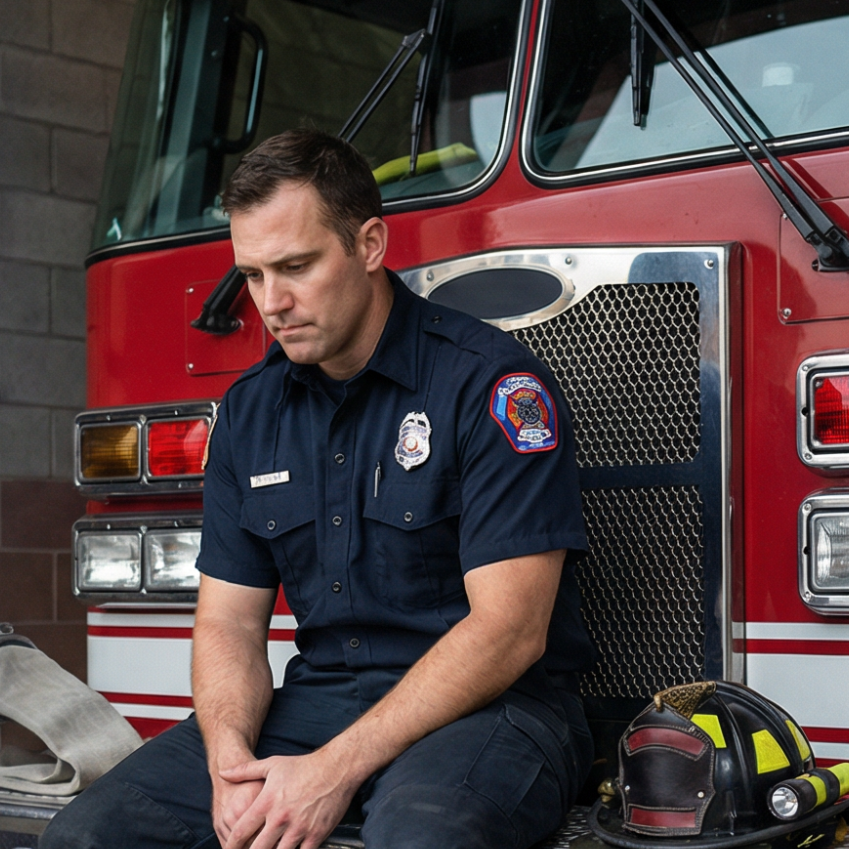
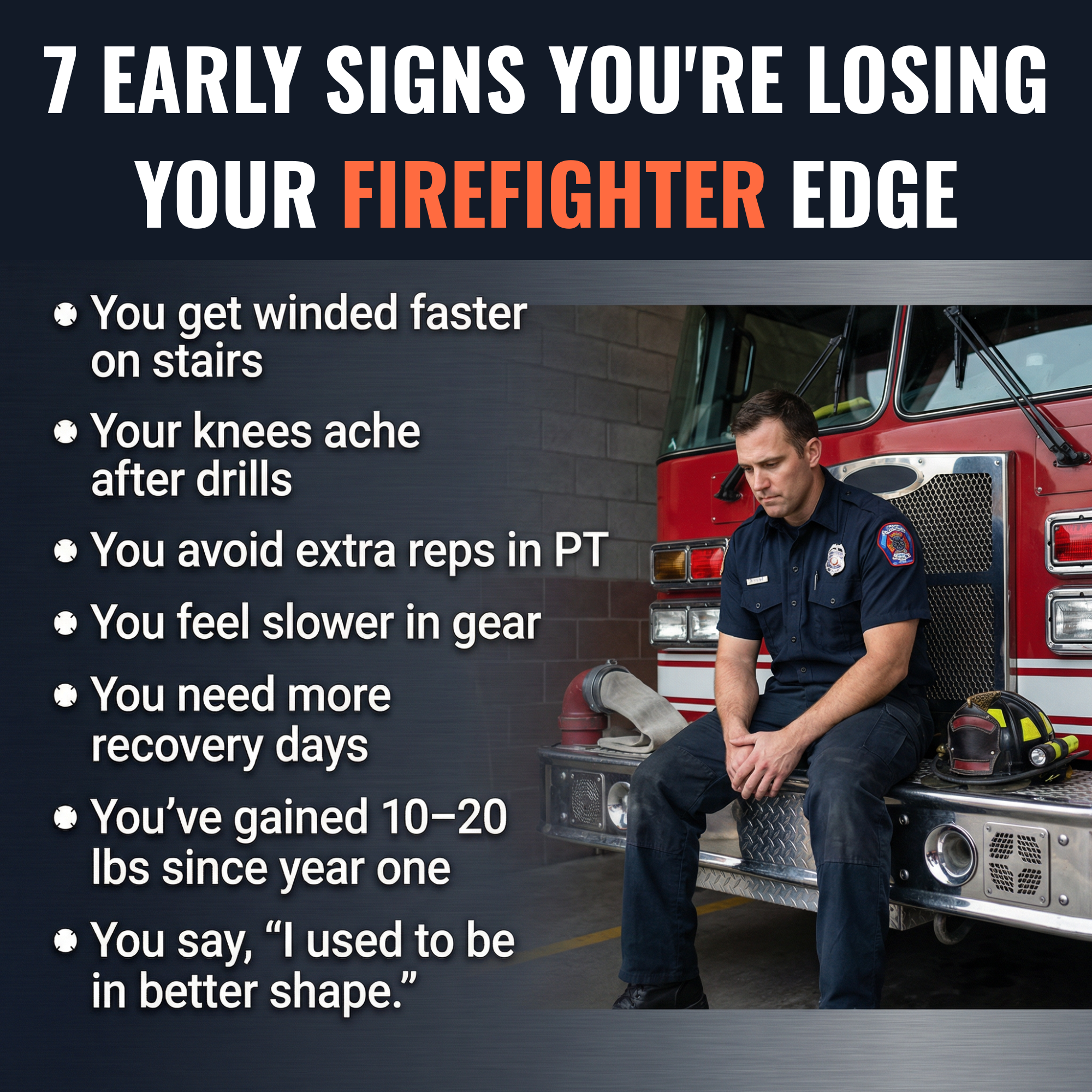
Nobody wakes up one day and suddenly loses their edge.
It happens slower than that.
And eventually you catch yourself saying something you never thought you’d say:
“I used to be in better shape.”
That sentence should hit hard because this isn’t just about fitness.
This is about readiness, confidence, and identity.
The quiet fear that maybe you’re slipping... and you don’t know how to get it back.
If any of the signs below feel familiar, don’t brush them off.
This is how the decline starts.
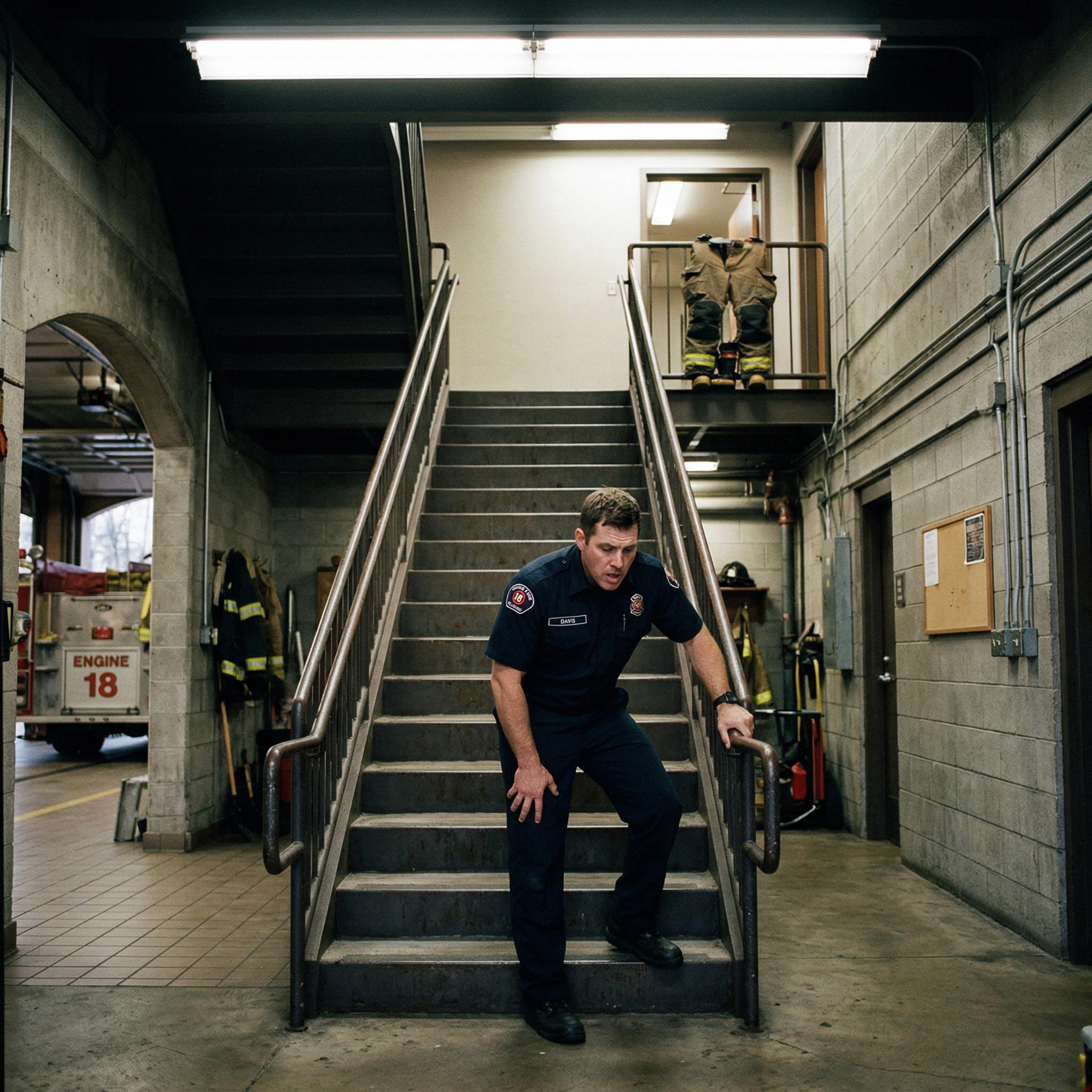
1. You get winded faster on stairs
Stairs expose the truth fast.
If you’re breathing harder earlier than you used to, your aerobic base and work capacity have probably slipped. That’s one of the first things firefighters notice when their edge starts fading.
This is exactly why Fit For Service starts by rebuilding conditioning, not just throwing random workouts at you. If your engine is weak, everything else feels harder.
2. Your knees ache after drills
A lot of firefighters blame age when the real issue is usually some mix of reduced strength, extra bodyweight, poor mobility, and bad recovery.
That’s common in the fire service, but it’s not something you should just accept.
A good firefighter-specific program should help you rebuild strength and movement quality at the same time. Look for one that trains durability.

3. You avoid extra reps in PT
This one is psychological.
When you stop trusting your body, you stop attacking the work the same way. You pace yourself. You hold back. You protect instead of push.
That’s usually a sign your conditioning, confidence, or recovery has taken a hit.
A structured rebuild like Fit For Service gives you a path back so you’re not guessing whether your body can answer the call.
4. You feel slower in gear
This is where the decline gets real.
Not weaker in the gym.
Not just softer in a shirt.
Slower in gear.
That usually means the problem has moved beyond aesthetics and into performance.
If this is the symptom hitting you hardest, you need to rebuild your conditioning. Then graduate into fireground-specific training once you’ve rebuilt your base.
5. You need more recovery days than you used to
Needing a little recovery is normal.
Needing a lot more than you used to is information.
That points to poor sleep, reduced fitness, rising inflammation, and a body that’s no longer bouncing back well.
This is where a lot of firefighters need more than training — they need a recovery fix too. That’s why KtP products work best as a system, not just isolated workouts.
6. You’ve gained 10–20 pounds since year one
A lot of firefighters can still function with extra weight, but they feel the difference everywhere:
-
stairs
-
joints
-
recovery
-
gear
-
confidence
-
energy
This is one of the clearest signs that life has slowly pulled you out of alignment.
A structured program like Fit For Service helps fix that because it gives you training, rhythm, and momentum again, not just motivation.

7. You say, “I used to be in better shape.”
This is the biggest warning sign of all.
Because once you start talking about your best shape in the past tense, you’ve started making peace with decline.
That’s the part you have to fight.
Not with guilt.
Not with ego.
With structure.
That’s why firefighter-built systems matter. They meet you where you are and help you rebuild your edge without pretending your schedule, recovery, and life are easy.
Losing your edge doesn’t happen all at once.
And getting it back won’t happen all at once either.
But if these signs sound familiar, that’s exactly why Fit For Service exists: to help firefighters rebuild the strength, conditioning, mobility, and confidence they used to take for granted.